
Rice Purity Test — Results Breakdown
Quick explainer: Your Rice Purity Test result is a descriptive snapshot, not a moral scorecard. It reflects which prompts you checked, and nothing more. Use the sections below to understand how the 0–100 range is typically grouped, what distribution we see anecdotally, and how you can compare notes with friends while keeping your privacy intact.
Reading your raw score
- Score starts at 100. Each checked prompt subtracts a point (or a small weight) until you land between 0 and 100.
- Context is everything. Age, community norms, and personal boundaries all influence how many prompts feel relevant.
- We don’t store your answers. This site calculates the result locally in your browser, so only you see the raw numbers unless you decide to share them.
Want the full methodology? See the score meaning explainer and the average score project.
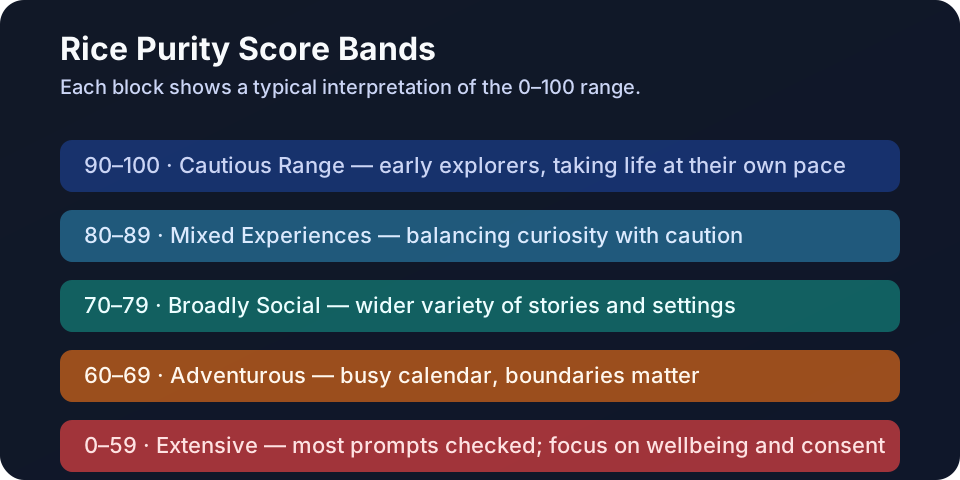
Typical score bands at a glance
| Band | Informal nickname | Social takeaway | | --- | --- | --- | | 90–100 | Cautious / Early explorer | Few checked boxes—common for younger teens or anyone who prefers to observe first. | | 80–89 | Mixed experiences | Many high school and college groups fall here; it signals a balance of curiosity and caution. | | 70–79 | Broadly social | A wider range of settings and scenarios. Check in with yourself about how each experience felt. | | 60–69 | Adventurous | Busy social calendar, lots of stories. Keep communication clear and boundaries respected. | | 0–59 | Extensive | You marked most prompts. No shame, but consider how each experience aligns with your current goals. |
Score names are intentionally neutral. They are conversation starters, not diagnoses.
Sharing results without oversharing
- Use the downloadable share card. On the quiz result page you can save an image that shows your score but hides every individual prompt.
- Keep screenshots in context. If you post to social media, add the reminder that the test is for entertainment.
- Compare trends, not secrets. In group settings, ask about ranges (“mid-80s gang”) rather than specific prompts.
Pro tip: When friends ask for “the list,” point them to the privacy-first test so they can try it independently.
Common follow-up questions
- Does the year matter (e.g., “Rice Purity Test 2024”)? The classic 100-prompt list has stayed mostly stable for years. Some communities adjust wording for relevance, but the scoring logic is similar.
- Can you improve your score? If “improve” means “raise,” you’d need to avoid checking boxes in the future. If it means “feel better about it,” focus on consent, mutual respect, and self-care.
- Is there a ‘best’ score for dating? No. Compatibility comes from communication and shared values, not a purity number. Use the score as a light-hearted icebreaker, not a litmus test.
- What if my result worries me? The quiz isn’t a diagnostic tool. If something feels heavy, talk to a trusted adult, friend, or professional—outside the scope of this playful checklist.
Next steps
- Re-run the Rice Purity Test with SFW mode toggled on or off to see how content filters affect your result.
- Explore similar quizzes and checklists if you want a different angle or a fandom twist.
- Helping a younger friend? Point them to the teen-friendly guide for safety tips and conversation starters.